iPadOS features additional technologies that take advantage of the unique functionality of iPad using the iOS SDK. With iPadOS, your iPad apps can now deliver multiwindow experiences, add full drawing experiences for Apple Pencil, and contribute fonts for systemwide use.
Multitasking
With Multitasking capabilities such as Slide Over, Split View, and Picture in Picture, users can quickly switch from one app to another with intuitive gestures.
Multiple Windows
The iPad Pro uses the DisplayPort standard, but requires a high-speed cable in order to output at 5K resolutions. Apple suggests Belkin's USB-C to USB-C cable or Apple's Thunderbolt 3 USB-C cable.
In iPadOS, apps that support Drag and Drop can also support multiple windows. For example, users of a document creation app can work on several documents at once, use the app in Split View or in multiple spaces, and even work with multiple apps in Slide Over.
Drag and Drop
With multitouch APIs, your apps can let users quickly move text, images, and files from one app to another. Support Drag and Drop in your apps to let users move content in a way that feels natural.
PencilKit
Apple Pencil delivers pixel-perfect precision and industry-leading low latency, making it great for drawing, sketching, coloring, taking notes, marking up email, and more. Your apps can take advantage of Apple Pencil, which features an intuitive touch surface that supports double-tap gestures. And with PencilKit, the new feature-rich drawing and annotation framework, you can now easily add a full drawing experience to your app — with access to a canvas, responsive inks, a rich tool palette, and a drawing model on iPadOS.
Files and Folders
Files now supports USB drives, SD cards, and file servers. And host of new features like Column View, Quick Actions and local storage make Files even more powerful.
Fonts
With iPadOS, your app can contribute fonts for systemwide use and use other contributed fonts, offered through the new font picker interface. And new system UI fonts are now available for use in your app.
Machine Learning
With on-device model training and a gallery of curated models, there’s never been a better time to take advantage of machine learning. Core ML seamlessly takes advantage of the CPU, GPU, and Neural Engine to provide maximum performance and efficiency, and lets you integrate the latest cutting-edge models into your apps. The Create ML app lets you build, train, and deploy machine learning models with no machine learning expertise required.
Augmented Reality
ARKit delivers an incredible awareness of people with the ability to integrate human movement into your app, the People Occlusion feature that lets AR content realistically pass behind and in front of people in the real world, and much more. RealityKit — Apple’s rendering, animation, physics, and audio engine — powers Reality Composer and can power your own AR apps, allowing you to seamlessly integrate virtual objects into the real world.
Desktop-class Browsing with Safari
Safari on iPad supports the latest web standards and automatically adapts websites and web apps to touch, delivering a rich browsing experience with blazing-fast performance, industry-leading security, and modern desktop features. Your site or embedded WebView can take advantage of powerful new features and coding best practices to deliver a best-in class user experience for iPad.
Building for iPad Pro
iPad Pro lets you deliver faster, more responsive experiences like never before. The all-screen design goes from edge to edge. Face ID works seamlessly in portrait or landscape. The A12X Bionic chip outperforms the vast majority of portable PCs, runs pro apps, and enables stunning augmented reality experiences. And with support for accessories like the second-generation Apple Pencil and Smart Keyboard Folio, iPad Pro represents the biggest change to iPad ever.
Face ID
This secure way to unlock, authenticate, and pay lets users quickly access your app with just a glance. The TrueDepth camera projects and analyzes more than 30,000 invisible dots to create a facial map that is encrypted and protected by the Secure Enclave on the device.
For details on user authentication, see the Human Interface Guidelines.
A12X Bionic
The A12X Bionic chip with the Neural Engine is the smartest, most powerful chip we’ve ever made, and it’s been designed specifically for iPad Pro. The A12X Bionic delivers faster CPU performance than the majority of portable PCs. The Apple-designed 7-core GPU, along with architectural enhancements and memory compression enable the GPU to perform up to 2x faster. And the 8-core Neural Engine, which runs five trillion operations per second, is dedicated to highly efficient, powerful machine learning, enabling all-new experiences.
UI Optimization
Take advantage of the all-screen design of the 11-inch iPad Pro and 12.9-inch iPad Pro (3rd generation) by building your app with the iOS 12.1 SDK or later and making sure it appears correctly with the display’s rounded corners and home indicator.
Run and Test in Simulator. Make sure your apps take advantage of the edge-to-edge Liquid Retina display by respecting safe areas and supporting adaptive layouts. Read the updated Human Interface Guidelines, download the latest version of Xcode, and test your app in Simulator.
Enable full screen native resolution. Your app will run in Full Screen Display Mode on iPad Pro if your project’s base SDK is set to iOS 12.1 or later and you have a Launch Storyboard.
Verify all parts of your app. Make sure that your UI displays correctly and no elements are mispositioned, overlapping, incorrectly scaled, or clipped. If you discover issues, use the safe area guides and layout margins to correctly position UI elements.
Bring Your iPad App to Mac
Get a huge head start on creating a native Mac app based on your existing iPad app. Your Mac and iPad apps share the same project and source code, so any changes you make translate to both platforms. And your newly created Mac app runs natively, utilizing the same frameworks, resources, and even runtime environment as apps built just for Mac.
Sidecar on macOS Catalina
Users running macOS Catalina can use iPad as a secondary display alongside Mac and draw with Apple Pencil on iPad. There’s no need to make any adjustments to Mac apps — they just work.
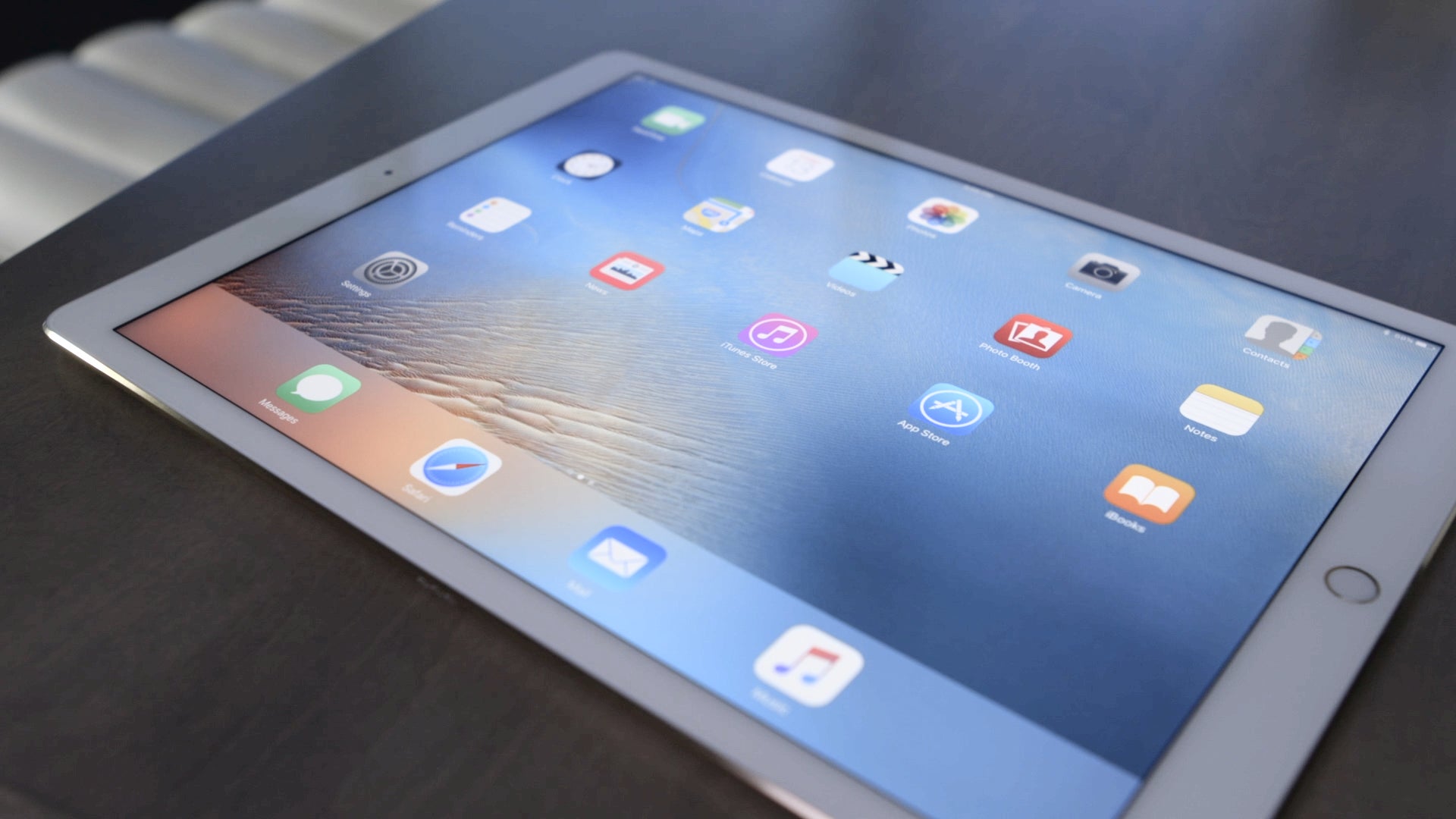
Extend or mirror your Mac desktop with Sidecar
- Make sure that your Mac and iPad meet the Sidecar system requirements.
- You can use Sidecar wirelessly, but to keep your iPad charged during use, connect it directly to your Mac with the USB charge cable that came with your iPad.
- Click the AirPlay icon in the menu bar on your Mac, then choose the option to connect to your iPad. Or use Sidecar preferences to connect.
If you don't see the AirPlay icon, choose Apple menu > System Preferences, click Displays, then make sure that ”Show mirroring options in the menu bar when available” is selected. - Your iPad should now show an extension of your Mac desktop. You can move windows to it and use it like any other display.
- To mirror your Mac display so that both screens show the same content, return to the AirPlay menu, which is a blue rectangle while using Sidecar. Choose the option to mirror your display. This is a great way to share your Mac screen with others.
- To end your Sidecar session, return to the AirPlay menu and choose the option to disconnect. Or click the Disconnect button in the sidebar on your iPad.
Learn more about using external displays. For example, you can use Displays preferences to arrange displays so that your iPad extends the left, right, top, or bottom of your desktop.
Move a window to your iPad display
If you hover your pointer over the full-screen button of a window, you can choose to move that window to or from your iPad display. It's faster than dragging the window, and the window is perfectly resized for your display.
The sidebar puts commonly used controls on the side of your iPad screen. It includes Command, Shift, and other modifier keys, so you can choose essential commands with your finger or Apple Pencil instead of a keyboard.
Use Sidecar preferences to turn off the sidebar or change its position.
Tap to show or hide the menu bar when viewing a window in full screen on iPad.
Command. Touch and hold to set the Command key. Double-tap to lock the key.
Option. Touch and hold to set the Option key. Double-tap to lock the key.
Control. Touch and hold to set the Control key. Double-tap to lock the key.
Shift. Touch and hold to set the Shift key. Double-tap to lock the key.
Undo the last action. Some apps support multiple undos.
Use the Touch Bar
Many apps on Mac have Touch Bar controls that make common actions even easier. With Sidecar, you get a Touch Bar on your iPad screen even if your Mac doesn’t have a Touch Bar. It works just like the Touch Bar on Mac, and you can tap its controls with either your finger or Apple Pencil.
Use Sidecar preferences to turn off the Touch Bar or change its position.
If the Touch Bar doesn't appear when using an app that offers Touch Bar controls, choose Apple menu > System Preferences, click Mission Control, then make sure that “Displays have separate Spaces” is selected.
Use gestures for scrolling and other actions
Multi-Touch gestures on iPad remain available when using Sidecar. These gestures are particularly useful with Sidecar:
- Scroll: Swipe with two fingers.
- Copy: Pinch in with three fingers.
- Cut: Pinch in with three fingers twice.
- Paste: Pinch out with three fingers.
- Undo: Swipe left with three fingers, or double-tap with three fingers.
- Redo: Swipe right with three fingers.
Use Apple Pencil
Ipad Pro Pencil Mac App Mirroring Ipad
To point, click, select, and perform tasks such as drawing, editing photos, and manipulating objects on your iPad while it's extending or mirroring your Mac display, you can use your Apple Pencil instead of the mouse or trackpad connected to your Mac. You can also use it to write, sketch, and mark up documents while seeing the updates live on your Mac.
Sidecar also supports double-tap, which you can turn on in Sidecar preferences. Double-tap enables apps that support this feature to perform custom actions when you double-tap on the side of your Apple Pencil (2nd generation).
Use a keyboard, mouse, or trackpad
During your Sidecar session, you can type using a keyboard connected to either your Mac or iPad, including the Smart Keyboard or Magic Keyboard for iPad.
To point, click, or select with a mouse or trackpad, use the mouse or trackpad connected to your Mac, or use an Apple Pencil on your iPad.
Use iPad apps
While using Sidecar, you can switch to an iPad app, then interact with that app on your iPad as you normally would. This suspends your Sidecar session until you switch back to the Sidecar app or disconnect Sidecar. The Sidecar app appears on your home screen only while using Sidecar.
Use Sidecar preferences
Choose Apple menu > System Preferences, then click Sidecar. These preferences are available only on computers that support Sidecar.
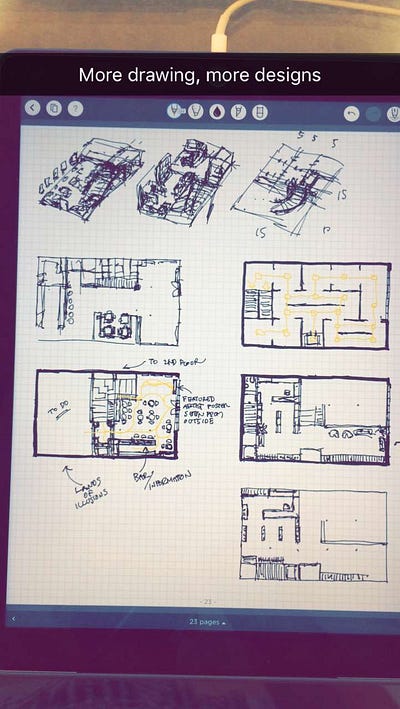
Free Mirroring Apps
- Show Sidebar: Show the sidebar on the left or right side of your iPad screen, or turn it off.
- Show Touch Bar: Show the Touch Bar on the bottom or top of your iPad screen, or turn it off.
- Enable double tap on Apple Pencil: Allow apps that support this feature to perform custom actions when you double-tap on the side of your Apple Pencil (2nd generation).
- Connect to: Choose an iPad to connect to, or click Disconnect to stop using Sidecar.
Sidecar system requirements
Best Drawing Apps For Ipad Pro
Sidecar requires a compatible Mac using macOS Catalina and a compatible iPad using iPadOS 13:
Mac using macOS Catalina
- MacBook Pro introduced in 2016 or later
- MacBook introduced in 2016 or later
- MacBook Air introduced in 2018 or later
- iMac introduced in 2017 or later, plus iMac (Retina 5K, 27-inch, Late 2015)
- iMac Pro
- Mac mini introduced in 2018 or later
- Mac Pro introduced in 2019
iPad using iPadOS 13
- iPad Pro: all models
- iPad (6th generation) or later
- iPad mini (5th generation)
- iPad Air (3rd generation)
Additional requirements
- Both devices must be signed in to iCloud with the same Apple ID using two-factor authentication.
- To use Sidecar wirelessly, both devices must be within 10 meters (30 feet) of each other and have Bluetooth, Wi-Fi, and Handoff turned on. Also make sure that the iPad is not sharing its cellular connection and the Mac is not sharing its Internet connection.
- To use Sidecar over USB, make sure that your iPad is set to trust your Mac.
Ipad Mirroring Pc
Learn more
- Resolve Wi-Fi and Bluetooth issues caused by wireless interference, which can affect Sidecar performance when using Sidecar wirelessly.