How to setup a Google App Engine Python environment, on Mac OSX, using Homebrew Alfredo Development 2016//03/08 2 Minutes I want to create Google App Engine apps using Python SDK on my OSX machine: setting up the enviroment should be easy, but I neverthless spent some time putting together all the required pieces.
Prerequisites:- For developing on GAE using Python run-time you will need to install first the Python run-time in your local machine. You can find the binary installers for Windows, Linux and Mac at
http://www.python.org/download/Note: For windows users you must use the correct Python installer depending if you have a 64-bit or a 32-bit Windows version. Follow this simple guide from Yahoo Answers to check which one is best for you:
Windows VistaMethod 1
1. Click Start, type system in the Start Search box, and then click system in the Programs list.
2. The operating system appears as follows:
• For a 64-bit version operating system: 64-bit Operating System appears for the System type under System.
• For a 32-bit version operating system: 32-bit Operating System appears for the System type under System.
Method 2
1. Click Start, type system in the Start Search box, and then click System Information in the Programs list.
2. The operating system appears as follows:
• For a 64-bit version operating system: x64-based PC appears for the System type under Item.
• For a 32-bit version operating system: x86-based PC appears for the System type under Item.
Microsoft Windows XP ProfessionalMethod 1
1. Click Start, click Run, type sysdm.cpl, and then click OK.
2. Click the General tab. The operating system appears as follows:
• For a 64-bit version operating system: Microsoft Windows XP Professional x64 Edition Version < Year> appears under System.
• For a 32-bit version operating system: Microsoft Windows XP Professional Version< Year> appears under System.
Note <Year> is a placeholder for a year.
Method 2
1. Click Start, click Run, type winmsd.exe, and then click OK.
2. In the details pane, locate Processor under Item. Note the value.
• If the value that corresponds to Processor starts with x86, the computer is running a 32-bit version of the Windows operating system.
• If the value that corresponds to Processor starts with ia64 or AMD64, the computer is running a 64-bit version of the Windows operating system.
Microsoft Windows Server 2003Method 1
1. Click Start, click Run, type sysdm.cpl, and then click OK.
2. Click the General tab. The operating system appears as follows:
• For a 64-bit version operating system: Microsoft Windows Server 2003 Enterprise x64 Edition appears under System.
• For a 32-bit version operating system: Microsoft Windows Server 2003 Enterprise Edition appears under System.
Method 2
1. Click Start, click Run, type winmsd.exe, and then click OK.
2. In the details pane, locate Processor under Item. Note the value.
• If the value that corresponds to Processor starts with x86, the computer is running a 32-bit version of the Windows operating system.
• If the value that corresponds to Processor starts with EM64T or ia64, the computer is running a 64-bit version of the Windows operating system.
Finally, Intel Itanium-based computers can only run 64-bit versions of Windows. Intel Itanium-based computers cannot run a 32-bit Windows operating system. Currently, 64-bit versions of Windows only run on Itanium-based computers and AMD64-based computers.
Note: For Linux users you must also check if you are using a 64-bit or 32-bit kernel by issuing as root the shell command 'uname -m' without quotes. - For developing on GAE using Java run-time you need to install first the Java SE run-time edition (JRE). Most windows machines already comes with Java installed but its best to get the latest JRE and the Java SDK as well from http://java.sun.com/javase/downloads/index.jsp which contains all the installers for Windows and Linux. Mac users can get ti directly from the official Apple developer site at http://developer.apple.com/java/download/Note: There are two versions of Java, namely the Standard Edition (SE) and the Enterprise Edition (EE). I would recommend using SE and here is difference as explained on DevShed forums between two editions:
'Enterprise edition is largely web based applications. Servlets, JSPs, Java Beans, etc. You can put a swing or applet front on a j2ee application but the bulk of the application is still going to be something server based that a bunch of people have to connect to.
J2SE is mostly for local applications that don't require enterprise servers behind them.'
Note: Linux users can follow the guide from Sun on how to install Java found at http://java.com/en/download/help/5000010500.xml while for specific distributions check this list:- For Ubuntu: https://help.ubuntu.com/community/Java
- For CentOs, RedHat and Fedora: http://www.sysadmin.md/install-java-on-centos-redhat-fedora.html
Android Sdk Mac Download

Android Sdk Mac
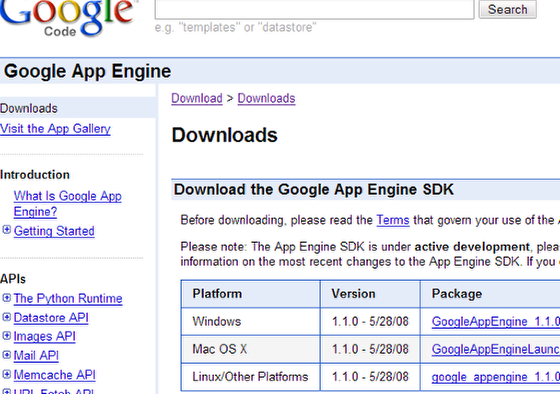
- Download the Google App Engine SDK, you can find both the GAE Python run-time and Java (early look) run-time SDKs at http://code.google.com/appengine/downloads.htmlNote: For Mac users, the SDK and Launcher is included in the single .dmg package.
- Run the downloaded installer, if you have performed the prerequisite steps properly the installer will be able to detect the Python or Java SE run-time installed, if not; it will prompt you to install them first.
- For Windows users you can download the Unofficial GoogleAppEngineLauncher for Windows at http://code.google.com/p/gaelwin/
- Congratulations, you are now ready to start writing your first Google App Engine application. Check the Table of Contents to find out what you can do next.