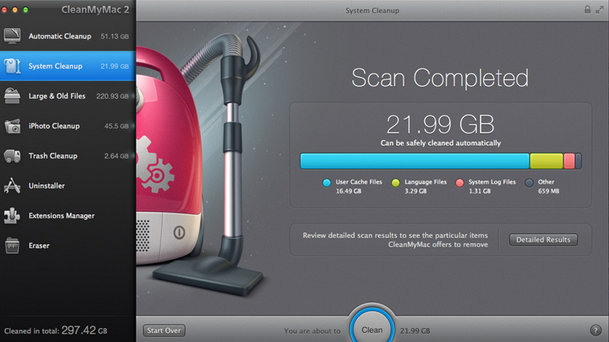
Introducing Hit List. Show your apps who's boss. Hit List is a brand new feature that allows you to visually browse all of the apps on your computer. Search, scroll, and filter your way through every app you have installed. Simply select an app to see its related files, and hit 'Zap!' To move them to the trash instantly.
How To Uninstall Software On Mac
- Download Google Chrome For Mac Os X Yosemite Best App Uninstaller For Mac 2014 Citrix Receiver 4.9 Download For Mac Download Parallels Desktop 13 For Mac Cracked Free Download Office 2016 For Mac Full Version How To Use Burn App For Mac App To Use Iphone As Mouse For Mac.
- Uninstalling applications downloaded from the Mac App Store is even easier — just delete the application from the Applications Folder and its accompanying folder in User Library Containers source: Tanous.
Installing a software or app is extremely easy and so does uninstalling the software when you don't need them anymore? Many times, for some unknown reason, a Mac system denies to remove some data. If this is happening with you then the first thing you could try is to restart the computer and then try to remove it again, but still failed! Then what should you do?
On the other hand, there are many stubborn software that won't get uninstalled whatsoever. You will continuously get errors, warning and unknown issues when uninstalling them. These are usually infected with viruses or the developers don't intend to let you uninstall them. This could be really very intimidating especially when they are slowing down your computer. In this article, we will show you few simple tricks to remove unwanted apps or softwares that won't delete on Mac.
Part 1. How to Delete Apps in the Finder on Mac Manually (the Hard Way)
Unlike Windows computers, Mac works a little distinctly. All the programs and apps are stored in the Application directory. The app and software configuration settings are saved in the Library/Preferences folder and any other additional supporting data are saved in the /Library/Application_Support folder. In order to remove the Apps in Mac, you only have to open the application folder and drag the app to the Bin or Trash Can. This is rather easy if the program is uninstalled simply.
However, if the application still denies to uninstall and stays on the Mac then we need to get another solution below.
Delete the Preferences
If you can't delete the app by using the above method then the reason could be that the preferences folder of that app still exists. Let's go and delete that first.
Step 1. Open Finder then click on the Go option from the dropdown menu.
Step 2. When the menu pops down, simple press the Option key and keep holding it.
Step 3. You will now see the Library option right between the Computer and Home options. Click on it and the folder should open.
NOTE The final necessary thing to do after uninstalling a program is to empty the trash can or Bin. Dragging and dropping a software shortcut icon to the Bin will actually do nothing. It is only erasing the shortcut, this won't uninstall the program. It is still laying somewhere in your computer however, if you empty the trash then the application is truly removed.
However, there's also a chance that the software files must have stored in the computer somehow, which happens quite often. So, if you are not able to remove Apps by yourself then it's better to take help from an automatic Mac program remover like CleanGeeker in Part 2..
Part 2: Completely Remove Unwanted Apps that Won't Delete on Mac (Easy Way)
When any app is fishy enough not to get deleted from a Launchpad or Finder then you will have to use some sort of force to delete that. TunesBro CleanGeeker is one of the most powerful Mac app remover that helps to remove any app or software as well as the trace from the Mac without destroying your system. Unlike other App removers, CleanGeeker can deeply scan and remove multiple apps at once, including corresponding files and preferences. It also has other miscellaneous functions as well like cleaning junk files, clearing app caches and finding + deleting duplicate items from the computer like music, documents, pictures, videos, etc. To summarize, CleanGeeker is used to optimize and organize your Mac so that it remains clean and fast as a thunder.
CleanGeeker - Force to Delete Apps on Mac, Easy and Safe!
- Locate all the installed apps on your Mac and shows them in a list.
- Deeply scan and remove apps along with its remaining files like caches, or junk files.
- Force to remove unwanted app that won’t uninstalled, easy and safe! Never destroy your system.
- Optimize and improve your Mac’s space and performance.
Step 1Download and Install App Remover Tool on Your Mac
Download the App remover and install it normally on your Mac. Launch the program and enter the license code to activate the software. On the main user interface, you will be able to see multiple options on the screen. Just click on 'Uninstaller' from the mid left sidebar.
Step 2Scan All Apps that Installed On Your Mac
Let the program search all the apps installed in your computer. It may take few minutes.
Step 2 Found and Remove Unwanted Applications on Mac
Once the scanning is done, you should be able to look on all the apps that has been installed in the system. Choose the app that you want to remove and select the 'Delete' button once.
There's no software or apps that cannot be removed with CleanGeeker and that's why it's now a must have tool for everyone. Moreover, it helps to speed up your computer unbelievably fast and run it like it used to when you first bought it.
Part 3: Delete Apps Downloaded from Mac App Store
One of the best alternative to delete any app is by simply deleting it from the sales page from the App Store. Once you have done that, you will no longer be able to download it form there anymore. But, the app will remain active in the iTunes account which is associated with that. So, if you wish to download or update it later from the iTunes then you will be able to do that. But the important thing is: Once you delete any app which you have downloaded from Apple App Store, you won’t be able to recover that app or find the SKU to install it again.
So, if you want to delete any app from App Store without actually removing it then follow these steps –
Step 1. Open the Launchpad from the Dock section. At this point you should be familiar with it if not then just find the Rocket icon.
Step 2. After the Launchpad is opened, it will replace the existing Windows with the apps that are provided by default in alphabetic order. You can obviously do many things using this tool but at this moment we are just erasing the unwanted apps.
Step 3. Just like any iPhone or Android phone, click and hold on the app that you want to delete until it starts dancing. Next, click on the 'X' mark with your mouse or touchscreen.
Step 4. Now, confirm that you want to delete by clicking on the 'Delete' button once and the system will get rid of it instantly.
Done! Keep in mind, that you should not worry about accidentally delete the apps that you want to keep in Mac. You’re allowed to obviously re-install any app that you have deleted before without paying any extra. Simply go to the app store and it’s done.
Related Articles & Tips
If you’re interested in running Mac OS X, but you don’t want to pay ridiculous prices for a normal Mac, then a Hackintoshjust might be for you. Right now, the newest iteration of OS X is 10.10, known as Yosemite. In this guide, we’ll show you how to install Yosemite on your PC with the nely released “Yosemite Zone” distro, from Niresh.
The advantages of Unibeast vs. Yosemite Zone
Yosemite is a distro, which is a pirated copy of Mac OS X that has been modified to work with a PC. Distros are a popular Hackintosh alternative to Unibeast, a better-known installation tool which requires a retail copy of Mac OS X instead.
Yosemite Zone is essentially just a renamed version of the Niresh distro that we’ve covered previously on this website, except it has been updated to work with Apple’s newest version of Mac OS X. Using Yosemite Zone instead of Unibeast offers a far share of advantages– if you don’t have any qualms with the legal issues regarding distros, they’re actually the most convenient way to set up your Hackintosh:
- You don’t need a real Mac. Unibeast is a Mac app, so you need to have an existing Mac OS X installation for it to work. This usually means that you either have to find a real Mac, or set up a Mac virtual machine. However, with Yosemite Zone, you can just set up everything from a Windows computer.
- The post-installation is easier. By default, Yosemite Zone will automatically install necessary Hackintosh-specific kexts and drivers for your computer when you boot your Mac OS X installation for the first time. Unibeast requires you to do this manually, using the Multibeast tool. While the post-installation in Yosemite Zone isn’t perfect (you’ll probably have to use Multibeast anyways), it’s still a nice convenience.
- You can install it on a hard drive that already has Windows installed. By default, the Mac OS X installer will not work with hard drives that were originally formatted in Windows. Therefore, if your computer’s hard drive already has Windows installed on it, you won’t be able to install Mac OS X on there. Normally, you can bypass this limitation on Unibeast by applying the MBR patch; however, Yosemite Zone does this for you automatically, saving you one extra step.
- Yosemite Zone supports more hardware (including AMD). Normally, computers that use AMD processors are unsupported by Mac OS X. However, Yosemite Zone includes experimental “patched” kernels that may allow Mac OS X to work with these processors regardless.
Interested? Here are the requirements:
- Multibeast (Free): Multibeast is a collection of kext files that your Hackintosh will need to run properly, after the initial installation. Be sure to download the newest version 7 of Multibeast, not the older versions 3, 4, 5, or 6 (which are for Snow Leopard, Lion, Mountain Lion, and Mavericks respectively).
1a. Create your Yosemite Zone USB drive (Mac)
Follow this step if you’re setting up Niresh on a Mac or existing Hackintosh. Plug your USB drive into Mac OS X, and open Disk Utility (located in Applications->Utilities in your main hard drive). Select your USB drive in the sidebar of Disk Utility and erase the drive, with the “Format” set to “MS-DOS (FAT)”. You can rename the drive any way you want.Next, make sure that your Yosemite Zone disk image file is in the same folder as “Restore Yosemite.pkg”. If “Restore Yosemite.pkg” is still in a ZIP file, double-click that file to unzip it.Double click on “Restore Yosemite.pkg” to start the app. By default, the app will be aimed at your computer’s main hard drive (mine is named “Super Panda” in the screenshot below). You do not want this– instead, click through the installer until you reach the page with the “Change Install Location” button.
From here, change the install location of the app to your USB drive (mine is named “Macaroni” in the screenshot below).
Press the enter/return key. The app will ask for your system password. After you enter your password, it will begin writing the Yosemite Zone disk image onto the USB drive. This will probably take 20-40 minutes, though it may take longer, depending on the speed of your USB drive. Once it finishes, your USB drive will contain a fully bootable version of the OS X Yosemite installer.
NOTE: “Restore Yosemite.pkg” is very glitchy. If you can’t find the “Change Install Location” button on the first time that you run the app, restart your computer and re-run the app.
1b. Create your Yosemite Zone USB drive (Windows)
Follow this step if you’re setting up Yosemite Zone on Windows. Plug your USB drive into your computer, and open TransMac. Find your USB drive on the left-hand column of the TransMac window. Right-click on the USB drive, and click “Format Disk for Mac”. This will delete all of the files on your drive and prepare it for Mac OS X.

Once your USB drive is done formatting, right-click it again and click “Restore with Disk Image”. A file selection window will pop up; choose your Yosemite Zone disk image file (it will probably be called “Yosemite-Zone.dmg”), and proceed. Now, TransMac will write Yosemite Zone onto your USB drive.
This will probably take 20-40 minutes, though it may take longer, depending on the speed of your USB drive. Once TransMac finishes, your USB drive will contain a fully bootable version of the OS X Yosemite installer.
2. Set up the parts of your PC
I covered these steps in my Snow Leopard guide, but they’re worth mentioning again:
- Unplug all USB-connected devices from your computer before you begin the setup (except your keyboard and mouse). A faulty external USB hard drive can cause your Hackintosh bootloader to give you EBIOS errors on startup.
- Open up your computer and unplug any extra internal hard drives that your computer has, besides the hard drive that you’re installing OS X on. (Just unplug the hard drive SATA cables from your motherboard.)
- If possible, connect your monitor to the DVI port of your computer’s graphics. The Mac OS X installer sometimes has problems with HDMI and VGA.
Uninstall App Mac Yosemite
3. Set up your motherboard’s BIOS
Essentially, the BIOS (or UEFI) is the settings page for your computer’s motherboard. From here, you can fiddle with how your computer hardware works– it’s often necessary to change a few basic settings in the BIOS or UEFI to get Mac OS X up and running. The BIOS standard is generally used by motherboards from before 2012, while the UEFI standard is used by motherboards made after that.Not sure whether your computer’s motherboard uses BIOS or UEFI? Here’s a quick guide to differentiating between the two: the interface of BIOS is usually monochrome and entirely text-based. Meanwhile, the interface of UEFI usually has pictures, and allows you to use your mouse pointer.
Depending on the brand and standard used by your computer’s motherboard, adjust your settings accordingly:
- If you own a Gigabyte motherboard with BIOS: Guide
- If you own a Gigabyte motherboard with UEFI: Guide
- If you own a non-Gigabyte motherboard with UEFI (from tonymacx86):
- To access BIOS/UEFI Setup, press and hold Delete on a USB Keyboard while the system is booting up.
- Load Optimized Defaults.
- Set USB drive to the highest boot priority.
- If your CPU supports VT-d, disable it.
- If your system has CFG-Lock, disable it.
- If your system has Secure Boot Mode, disable it.
- If your system has OS Type, set it to Other OS.
- Save and exit.
Once that’s done, plug in your Unibeast USB drive in your computer, and then restart your computer.
4. Boot into Yosemite Zone
Restart your Hackintosh, and plug in your Yosemite Zone USB drive. If things go well, your computer will boot from the USB drive instead of booting from your normal hard disk. You will then be able to view the Yosemite Zone menu.
If you do not manage to reach the Yosemite Zone menu, check your motherboard’s BIOS settings to make sure that the changes you made in Step 3 were properly applied. If they were, but you still cannot boot from the Yosemite Zone USB drive, unplug your USB drive, and go back to Step 1. Reformat your USB drive with Disk Utility and try again. If all else fails, try using a different USB drive for Yosemite Zone.
At the Yosemite Zone menu, press the enter key (or return key) to start the OS X Yosemite installer. The installer screen will take several minutes to load. If you are trying to install OS X Yosemite on a computer using an AMD processor, you’ll have to type the boot flag “/amd”, “/amd32”, “/amd64”, or “/amdfx (without quotation marks)– which flag you need depends on your specific processor, so test one flag a time.
In the worst case scenarios, instead of loading the Mac OS X installer, you may end up at a dark gray screen that tells you to restart your computer (a kernel panic), or you may end up with a small crossed-out sign (a loading error). If you get a kernel panic/loading error (or if the Mac OS X installer simply won’t start within 10 minutes), you’ll need to enter some boot flags. To enter boot flags, manually restart your computer by pressing your computer’s power button. Then, once you’ve booted back into the Yosemite Zone menu, try typing any necessary boot flags before pressing the enter/return key. Check out our list of common boot flags and our guide to fixing boot problems with verbose mode for reference.
Uninstall An App On Mac Yosemite 10.10
Once you’ve entered the OS X Yosemite installer, you will come up to a hard disk selection page. This is where you choose where you want to install Yosemite.If you’re installing Yosemite on a computer that has never been turned into a Hackintosh before (i.e. doesn’t already have Snow Leopard, Lion, Mountain Lion, or Mavericks installed), there won’t be any hard disk options to select. We’ll have to fix that. To do this, start up Disk Utility, which is located under the Utilities menu in the top bar.You need to use Disk Utility to erase a hard drive partition so that OS X Yosemite can install itself on it. In the sidebar of Disk Utility, choose the hard drive partition where you want Yosemite installed, and erase it by using the “Erase” tab. You can also just erase the entire hard drive (this is the preferred solution if you don’t plan to dual-boot Windows and Mac OS X from the same hard drive). In the screenshot below, my two hard drive partitions are called “Cool Stuff” and “Not Cool Stuff”, while my entire hard drive is called “21.47 GB VBOX HARDDRIVE”.
When erasing, the format should be set to “Mac OS Extended (Journaled)”. You can also partition the hard disk by using Disk Utility’s Partition tab.
NOTE: Mac OS X cannot boot from a partition that’s larger than 1 TB in size, so if you have a 2 TB hard drive, you will have to partition it.
On the installation page for Mac OSX, the hard disk/disk partition should now be showing up. Select it, and then click the “Customize” button on the bottom left. This is where using a distro becomes really useful: Yosemite Zone allows you to install extra Hackintosh drivers and kexts, straight from the OS X Yosemite installer. The “Customize” page essentially does the same thing as Multibeast, though the layout (and most of the names of the options) are different.
However, choosing the right options from this page can be really tricky, so unless you’re absolutely certain about which drivers and kexts you need to install for your computer, I don’t recommend installing too much stuff from here. The default selection will enable Mac OS X to boot from the hard drive without any assistance, and automatically enable audio and ethernet. For most computers, that will be enough.
If you wish to install more, refer to our guide to Multibeast. Otherwise, you can figure out the rest in Step 7, where you’ll actually set up your Hackintosh with Multibeast.
If your computer already has Mac OS X installed and you are simply updating it to Yosemite, you can just uncheck all of these options. Mac OS X treats Yosemite as just another update– there’s no need to reinstall all of your kexts and drivers.
Once you’re done with the “Customize” page, install Yosemite. This will take at least 30 minutes.
6. Boot into Mac OS X
Once the installation finishes, remove your Yosemite Zone USB drive, and restart your computer. At the boot screen, you’ll see an Apple icon for the hard drive where you installed Yosemite. Select it (use the arrow keys on your computer) and press “Enter”.
Yosemite will boot. Mission accomplished! Once again, if you get a kernel panic/loading error when you try to boot your new Yosemite installation (or if the installation simply won’t start within 10 minutes), you’ll need to enter some boot flags. To enter boot flags, manually restart your computer by pressing your computer’s power button. Then, once you’ve booted back into the Yosemite Zone menu, try type any necessary boot flags before pressing the enter/return key. Check out our list of common boot flags and our guide to fixing boot problems with verbose mode for reference.
Uninstall Apps On Imac
Once Yosemite has booted successfully, click through through the Mac OS X setup screens until you reach the desktop. From here, Yosemite Zone will work its magic, and automatically install the rest of the Hackintosh-specific kexts and drivers from Step 5.
Wait several minutes, while this process works in the background. Once you receive a notification saying that the installation has been completed, restart your computer.
7. Multibeast
Multibeast is a collection of kext files that you’ll need to install for your Hackintoshes to have sound, internet, a high resolution screen, and more. Different Hackintosh builds require different Multibeast setups, though most setups are very similar. Find out what options you need to install by checking our Multibeast guide to OS X Yosemite.
Whether you’re installing OS X on your computer for the first time, or just updating your computer from an older version of OS X, you’ll probably have to run Multibeast after the initial installation of Yosemite.
To run Multibeast in OS X Yosemite, you may have to go the “Security” section of System Preferences in Mac OS X, go to the “General” section, and check “Anywhere” in the “Allow applications” section. After running Multibeast, you’ll also probably want to change your BIOS settings back to normal (from Step 4).
Once that’s done with, you should be running a fully functional copy of OS X Yosemite on your PC. If you plan on updating Mac OS X in the future, check out our guide to updating your Hackintosh. Congratulations!